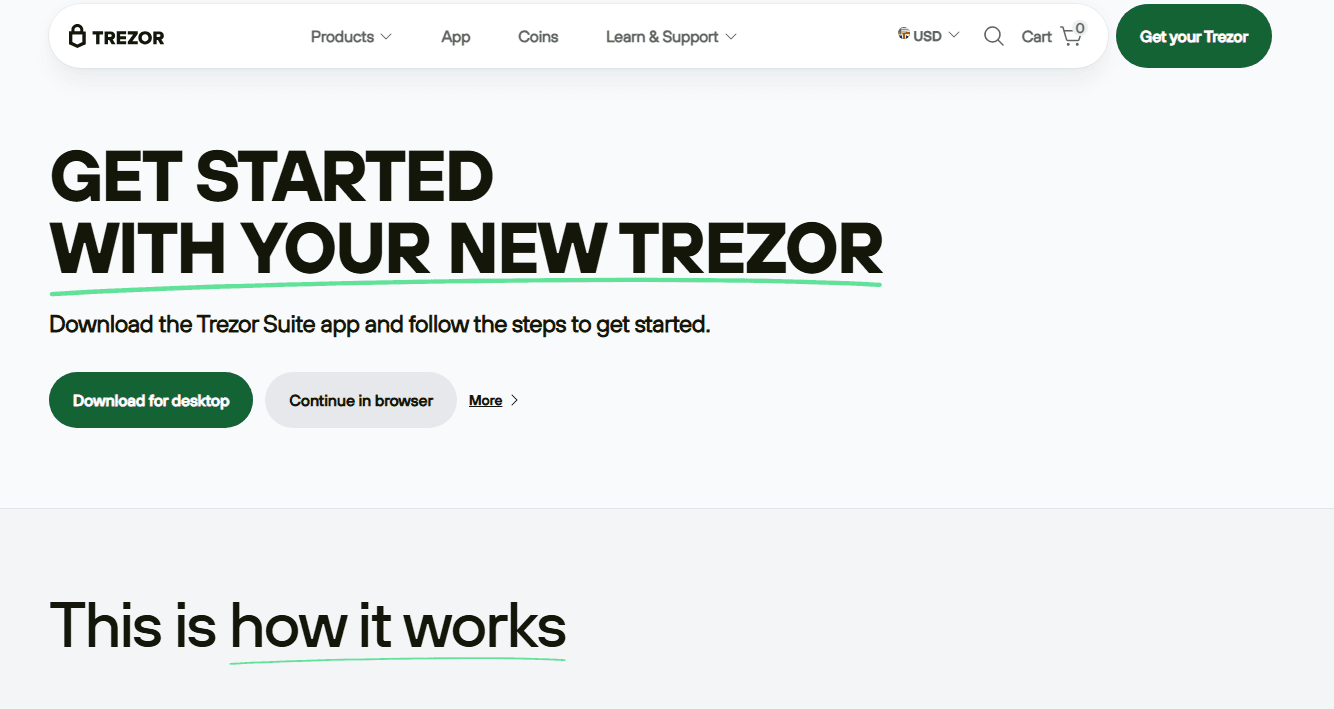
Trezor.io/Start – A Complete 1200-Word Guide to Setting Up Your Trezor Wallet
Setting up a hardware wallet for the first time can feel intimidating, especially when your goal is to protect valuable digital assets. Trezor has long been considered one of the most trustworthy tools for safeguarding cryptocurrencies, and the onboarding process begins through the guided setup environment known simply as the Trezor start interface. This detailed walkthrough explains everything you need to know about preparing your device, establishing a secure wallet, managing assets, and maintaining long-term protection without referencing external links.
1. Introduction to the Trezor Start Experience
The Trezor start environment is designed to help new users seamlessly activate their hardware wallet, perform the initial configuration, and understand the essential features that keep digital assets secure. Whether you are using a Trezor Model One or a Trezor Model T, the setup process follows the same core structure. The goal is to ensure that by the end of the onboarding process, you have a fully functioning wallet with strong protection measures already in place.
Trezor serves as a physical security layer that stores your private keys offline. Unlike software wallets, which reside on internet-connected devices, a hardware wallet minimizes exposure to digital threats. The Trezor start setup is where users learn how to create a recovery seed, install the necessary software tools, and gain an understanding of how to manage their crypto safely.
2. Unboxing Your Device and Initial Preparation
Before beginning the setup, inspect the packaging to confirm that the device has not been tampered with. Authentic Trezor products come sealed and clearly protected against unauthorized access. Once you are confident that everything looks original, connect your device to your computer using the supplied cable.
At this stage, the Trezor device screen will prompt you to begin the setup process. You will also need your computer, as the main interface guides you through installation steps. The hardware wallet works in conjunction with companion software, which allows you to manage cryptocurrencies, check balances, approve transactions, and perform updates.
3. Installing the Required Interface
The Trezor start setup walks you through downloading the desktop interface that communicates with your hardware wallet. This interface acts as the control panel where you perform all wallet-related functions. Since the device itself cannot store or display detailed coin information, transactions, or network data, the companion software bridges the gap while keeping your keys safely offline.
Once the installation is complete, open the interface. It will ask you to connect your device, and from there, the system automatically detects your Trezor model. The pairing process ensures that both your device and your desktop software communicate securely.
4. Firmware Installation and Security Checks
New Trezor devices are shipped without firmware to ensure maximum security. During the setup, you will be prompted to install the latest firmware version. This process verifies that the software controlling your device is genuine and up-to-date.
The firmware installation takes just a few moments. Once it finishes, you will be asked to disconnect and reconnect the device to confirm integrity. This simple step ensures that the device boots into a secure environment and that the firmware has been properly installed.
5. Creating Your Recovery Seed
One of the most important steps in the entire Trezor start experience is generating the recovery seed. This is a series of words, usually twelve, eighteen, or twenty-four, depending on your device model. These words form the master backup for your wallet. If your device is ever lost, stolen, damaged, or reset, the recovery seed is what allows you to restore access to your funds.
During creation, the recovery seed will appear only on the hardware wallet screen. It never displays on your computer to avoid exposure to malware or screenshots. Write the words down on paper, and store them somewhere secure and offline. Never photograph, type, or store your seed digitally. Anyone with access to your seed can take full control of your assets.
After writing the seed, the device usually asks you to confirm the words in a randomized order to ensure accuracy. This step prevents errors that could cause restoration issues later.
6. Setting a Strong PIN
The PIN is your second layer of protection. Whenever you want to use your wallet, confirm a transaction, or make changes, the device will require your PIN. This prevents unauthorized access if someone physically obtains your hardware wallet.
Choose a PIN that cannot be easily guessed. Avoid predictable numbers, repeated digits, or patterns. The Trezor interface increases security by shifting the number grid with every entry attempt, reducing the risk of finger-tracking attacks.
If a wrong PIN is entered multiple times, the device increases the delay between attempts, making brute-force attacks virtually impossible.
7. Accessing Your New Wallet Dashboard
Once your seed and PIN are securely set, the Trezor interface opens your main dashboard. This is the control center for all your digital assets. From here you can:
View balances across supported cryptocurrencies
Add new accounts for different coins
Monitor recent transactions
Send and receive assets
Customize settings
Connect your wallet to supported third-party applications
Check your portfolio value
Manage privacy features and security preferences
The dashboard is designed to be intuitive even for beginners. Clear navigation tabs allow you to switch between different coin accounts with ease.
8. Adding and Managing Cryptocurrency Accounts
Each supported cryptocurrency requires an individual account within the interface. Adding accounts lets you segment your assets, making it easier to track and organize holdings.
Once an account is added, you can generate receiving addresses. Trezor requires that you confirm each address on the device screen, ensuring that no malicious software can alter the displayed information. When sending cryptocurrency, the device again asks for confirmation, verifying the exact destination address and amount before approving the transaction.
This double-verification process is a core part of Trezor’s security model.
9. Privacy Features and Advanced Security Options
The Trezor start environment also introduces you to additional protection features. Some users choose to activate passphrases, which create hidden wallets alongside the main one. This means even if someone accesses your recovery seed, they cannot reach the hidden wallet without the passphrase.
Other security features include:
Device-level security checks
Address confirmation on the physical screen
Transaction proofing
Offline signing
Secure update verification
Optional anonymity tools
These features give users more control over their privacy.
10. Ongoing Maintenance and Wallet Care
Keeping your Trezor secure involves routine care. Always store your recovery seed safely and never share it with anyone. Periodically check for firmware updates and install them through the official interface. Avoid downloading unauthorized software or connecting your device to suspicious computers.
Maintaining physical safety is equally important. Store your wallet in a clean, dry location and protect it from damage. If you use a protective case or fire-safe storage for your recovery seed, ensure it remains accessible to you in emergencies but hidden from others.
11. Conclusion
The Trezor start process is designed to give every user, whether experienced or completely new, a smooth and secure introduction to managing digital assets through a hardware wallet. By following each step carefully—from firmware installation, seed generation, and PIN creation to exploring the dashboard—you establish a strong foundation for safe crypto management. With your private keys stored offline and protected within the Trezor device, you gain confidence and control over your digital portfolio.