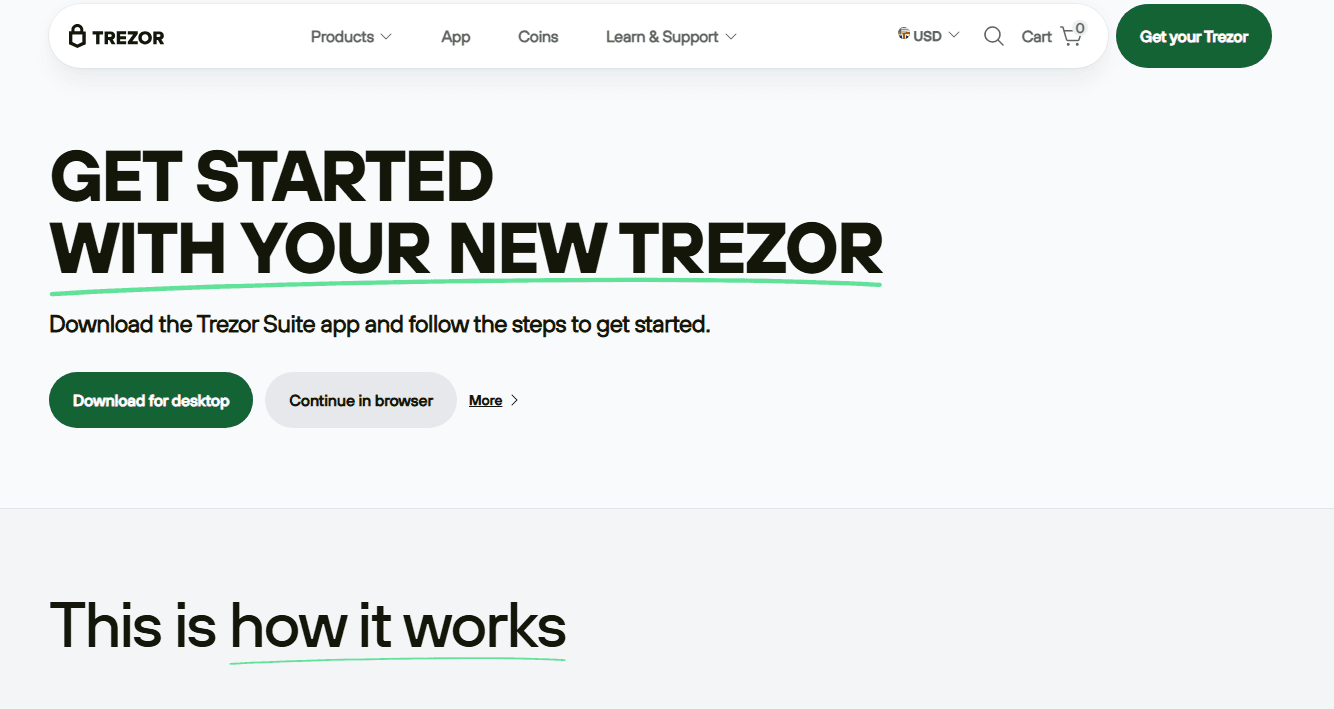
Trezor Start – Your Complete 1200-Word Guide to Setting Up and Securing Your Trezor Wallet
Getting started with a Trezor hardware wallet is one of the most important steps you can take toward controlling and protecting your digital assets. Trezor devices are trusted around the world for their unmatched security features, user-friendly design, and transparent open-source technology. Whether you are setting up your Trezor for the first time or exploring hardware wallets as a newcomer, this comprehensive guide walks you through every stage of the Trezor Start process, ensuring that you begin your crypto journey with full knowledge and confidence.
Understanding Trezor Start
Trezor Start is the official onboarding experience designed to help users properly initialize their device, learn crypto-security fundamentals, and build healthy habits for asset protection. By guiding you step by step, Trezor ensures that your private keys are generated securely, stored offline, and never exposed to digital threats.
The entire philosophy behind Trezor Start centers on three main pillars:
Ownership – You create and control your private keys.
Security – No one can access your wallet without your authorization.
Independence – Your assets remain protected even if your computer, network, or online accounts are compromised.
Hardware wallets like Trezor are designed to stay disconnected from the internet, which is the key to their strong security. Trezor Start introduces you to these principles in a straightforward, step-by-step manner.
Unboxing Your Trezor Device
After purchasing a new Trezor Model One or Model T, your first task is to examine the packaging. Authentic devices have:
A clean, sealed box
Security seals or protective packaging depending on the model
A USB cable
Recovery seed cards
A quick-start guide
Stickers (depending on model)
There should never be a prewritten recovery seed in the box. No words, codes, or stickers containing secret information should appear anywhere inside. Trezor devices are never shipped with preset credentials. If anything looks unusual or tampered with, it is safer to stop and not continue setup.
Connecting Your Device
Once you confirm everything is authentic, connect your Trezor device to your computer using the supplied USB cable. The device powers on immediately after connection.
For Model One, physical buttons help you navigate menus.
For Model T, a touchscreen allows more intuitive interactions.
You’ll be prompted to begin the setup. Trezor Start will guide you through installing the official software interface called Trezor Suite, which is necessary for managing your hardware wallet, installing firmware, and handling your crypto accounts.
Installing Firmware
When setting up a brand-new Trezor device, you must install the latest firmware. This step is required for all authentic units, since new devices are shipped without firmware to prevent tampering.
The process is simple:
Confirm firmware installation on your device
Allow the software to download and verify authenticity
Approve the upgrade when prompted
Firmware ensures that your device operates securely, supports the latest coins, and includes up-to-date protections.
Creating Your PIN
Your Trezor device protects itself with a PIN. This code serves as a barrier preventing unauthorized access. Creating a secure PIN is essential for the safety of your assets.
A good PIN should:
Be at least 6 digits
Avoid repeating patterns
Not reference personal dates or obvious combinations
Not be shared with anyone
Trezor’s innovative PIN entry method protects against keyloggers and malware because you enter the pattern on your computer but confirm numbers on the device screen.
If someone attempts to guess your PIN repeatedly, the delay between attempts increases exponentially, making brute-force entry nearly impossible.
Generating Your Recovery Seed
This is the single most important part of the Trezor Start process.
Your recovery seed is a series of 12, 18, or 24 unique words generated directly on the device. These words are the master backup of your wallet. If your Trezor device is ever lost, damaged, or replaced, this seed restores all your accounts and assets.
Important rules for your recovery seed:
Write it down on the supplied seed cards
Record all words in the exact order
Store the card in a safe, offline location
Never photograph or type the seed into a digital device
Never share it with anyone—not even Trezor support
No legitimate service will ever request your recovery seed. Anyone who knows these words can access your funds completely, even without the device.
Trezor will display the words slowly, allowing you to write them down. Once complete, you will confirm them to ensure accuracy.
Opening Trezor Suite
Once the device is initialized, you can begin using Trezor Suite. This software enables you to:
View your crypto portfolio
Install and manage coin accounts
Check balances
Send and receive cryptocurrencies
Switch networks
Access passphrase features
Monitor transaction history
Update firmware and security settings
Trezor Suite operates with the device, meaning sensitive operations always require verification on the hardware wallet.
Adding Cryptocurrency Accounts
Different cryptocurrencies require different wallet structures. In Trezor Suite, you will add accounts for the assets you want to manage. For example, you can create:
A Bitcoin account
An Ethereum account
Multiple subaccounts for organization
Accounts for tokens on supported networks
Each account operates independently, allowing you to segregate long-term holdings, trading funds, and savings.
Receiving Crypto Securely
When receiving digital assets, Trezor Suite provides a receiving address for your chosen account. Before sharing or using this address, Trezor requires you to verify it on your hardware device.
This important step prevents:
Computer viruses
Screen-overlay attacks
Clipboard hijacking malware
The address displayed on the Trezor screen is the real one. If it matches the address shown in Trezor Suite, you can safely continue.
Sending Crypto with Full Protection
To send cryptocurrency:
Enter the recipient’s address
Specify the amount
Adjust fees if needed
Review the transaction details
Approve it on the device screen
Your Trezor hardware wallet acts as the final checkpoint. Nothing can be sent without your physical confirmation.
Using Passphrases for Extra Protection
Trezor offers an optional advanced feature: the passphrase. This is an additional word or phrase added to your recovery seed to create a hidden, separate wallet.
Benefits include:
Enhanced privacy
Added security
Protection against physical seed exposure
Only use this feature if you fully understand how it works, because losing your passphrase permanently locks you out of that wallet.
Maintaining Long-Term Security
To keep your wallet safe:
Store your recovery seed securely offline
Keep your Trezor firmware updated
Protect your PIN
Avoid phishing sites and unknown software
Never type your recovery seed anywhere
Use Trezor Suite from trusted sources
Disconnect your device when not in use
Good habits protect you from the most common crypto threats.
Restoring Your Wallet
If you ever need to restore your wallet:
Select the recovery option on a new or reset Trezor device
Enter your recovery seed carefully
Set a new PIN
Reconnect to Trezor Suite
Your accounts, balances, and history will reappear instantly.
Why Trezor Start Matters
Trezor Start ensures users understand both the responsibilities and the security principles behind self-custody. It empowers you to take control of your digital wealth with confidence, independence, and long-term protection.
By learning how your device works, how to preserve your recovery seed, and how to use Trezor Suite effectively, you gain the knowledge required to safeguard your assets against online threats, human error, and malicious attacks.